








In a major stride for the cooperative sector, the Unique Identification Authority of India (UIDAI) has launched a new Aadhaar-based authentication framework exclusively designed for cooperative banks.
Announced on August 21, 2025, the initiative is aimed at advancing financial inclusion, enhancing digital services, and strengthening the role of cooperatives in last-mile banking across India.
The framework is set to cover 34 State Cooperative Banks (SCBs) and 352 District Central Cooperative Banks (DCCBs), bringing over 380 cooperative institutions directly into the Aadhaar ecosystem.
Developed after extensive consultations with the Ministry of Cooperation, NABARD, NPCI, and stakeholders from the cooperative sector, the system aligns with the vision of making 2025, the International Year of Cooperatives, a transformative moment for the movement.
A major advantage for cooperatives lies in the reduced technological burden. Under the arrangement, only State Cooperative Banks will be registered as Authentication User Agencies (AUA) and eKYC User Agencies (KUA).
Their associated DCCBs will simply use the Aadhaar application and IT infrastructure of the SCBs, eliminating the need for parallel IT systems. This simplification not only cuts costs but also ensures that even smaller cooperative banks can participate in Aadhaar-based services without facing financial or technical hurdles.
By integrating Aadhaar authentication, cooperative banks will be able to provide faster and more secure customer services. Biometric eKYC and face authentication will ease account opening processes, particularly in rural and semi-urban regions where cooperatives are a financial lifeline.
The framework also ensures that subsidies, government benefits, and welfare payments can flow directly into cooperative bank accounts, giving rural customers greater confidence in using cooperative institutions as their primary financial partners.
The new system further equips cooperatives to leverage Aadhaar Enabled Payment System (AePS) and the Aadhaar Payment Bridge, both of which facilitate digital payments and seamless transfers.
These measures are expected to significantly expand the role of cooperatives in India’s digital financial ecosystem, creating opportunities for wider adoption of electronic transactions in traditionally underserved areas.
This Aadhaar-based authentication framework represents a turning point for cooperative banking in India. By combining technological innovation with the cooperative movement’s deep local reach, the initiative not only empowers cooperative banks but also ensures they remain central players in advancing financial inclusion.
With over 380 cooperative banks onboarded, the sector is poised to make digital banking more accessible, affordable, and inclusive for millions across the country.



































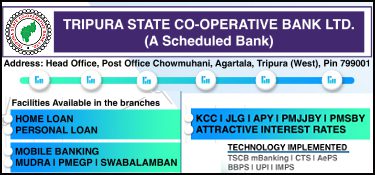















Very nice and useful design for cooperative moment