






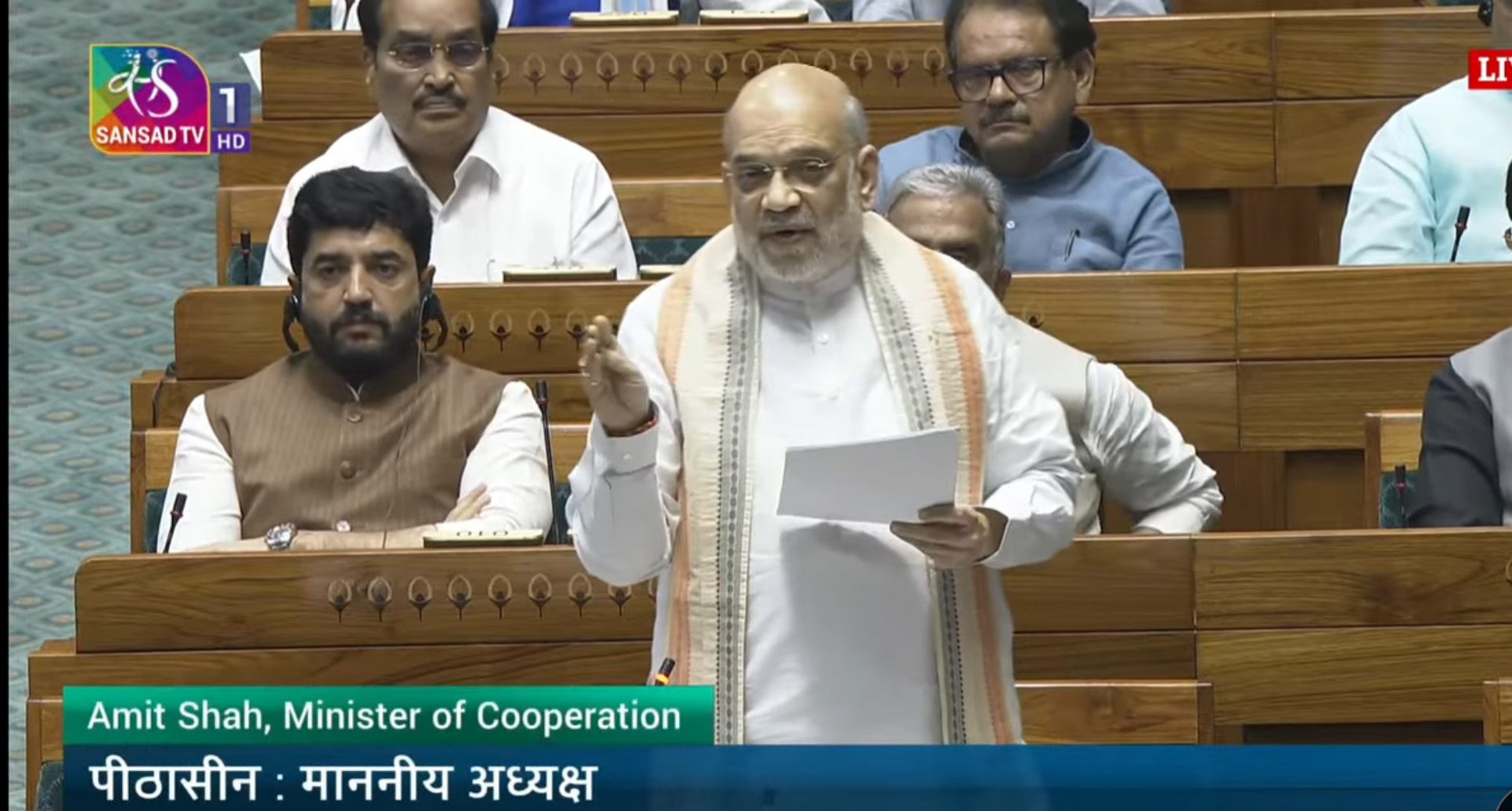
In a written reply to the Lok Sabha, Minister of Cooperation Amit Shah underlined the government’s commitment to ensuring that agricultural cooperatives receive the financial muscle they need for long-term, sustainable growth.
The Dirghavadhi Krishak Punji Sahakar Yojana remains a key instrument in enabling rural credit institutions to fund development-oriented projects, bolster farmer incomes, and reinforce the cooperative movement’s role in India’s agri-economy, Shah informed.
The National Cooperative Development Corporation (NCDC), under the Ministry of Cooperation, is intensifying efforts to strengthen agricultural credit cooperatives through the Scheme. The initiative supports cooperatives in providing long-term loans and advances for activities, commodities, and services within NCDC’s operational scope.
The corporation follows stringent funding guidelines to ensure that only credible and financially sound projects receive support. Projects must be backed by adequate security and pass rigorous appraisal processes that assess both financial viability and technical feasibility.
Under its Direct Funding Guidelines, NCDC evaluates proposals through multiple parameters, including internal rate of return (IRR), net present value (NPV), debt service coverage ratio (DSCR), interest coverage ratio, fixed asset coverage ratio (FACR), and projected cash flows. Additional scrutiny covers the cooperative’s financial health, past performance, managerial expertise, experience in similar projects, repayment record, capacity to raise its share of the project cost, and the adequacy of security offered.
This multi-layered vetting ensures that funding is channelled only into projects with strong techno-economic foundations, aligning with NCDC’s broader mission of integrated cooperative sector development.
To maintain accountability, the corporation employs a robust monitoring framework through its head office, 19 regional offices, and nine sub-offices. Projects are tracked on a periodic or need basis, with field inspections typically conducted quarterly. Beneficiary cooperatives are also required to submit regular progress reports, confirming that funds are being utilized strictly for their intended purposes.
Loan recovery is supported by a dedicated department with clearly documented processes. Notices are issued in advance as per repayment schedules, followed by timely reminders. In cases of default, NCDC invokes provisions of the SARFAESI Act, and when necessary, files cases in the Debt Recovery Tribunal (DRT).
The scheme has seen varied disbursement trends in recent years. In 2022–23, Rs 400 crore was sanctioned, though no amount was released. The following year, 2023–24, no fresh sanctions were made, but Rs 60 crore was disbursed from earlier approvals. In the current fiscal, 2024–25, NCDC sanctioned an unprecedented Rs 5,000 crore, releasing Rs 2,077 crore so far. Overall, the three-year sanction total stands at Rs 5,400 crore, with cumulative disbursements reaching Rs 2,137 crore.
By combining rigorous project scrutiny with sustained monitoring and strong recovery mechanisms, NCDC aims to ensure that every rupee lent under this scheme contributes meaningfully to the productivity and resilience of India’s agricultural sector.