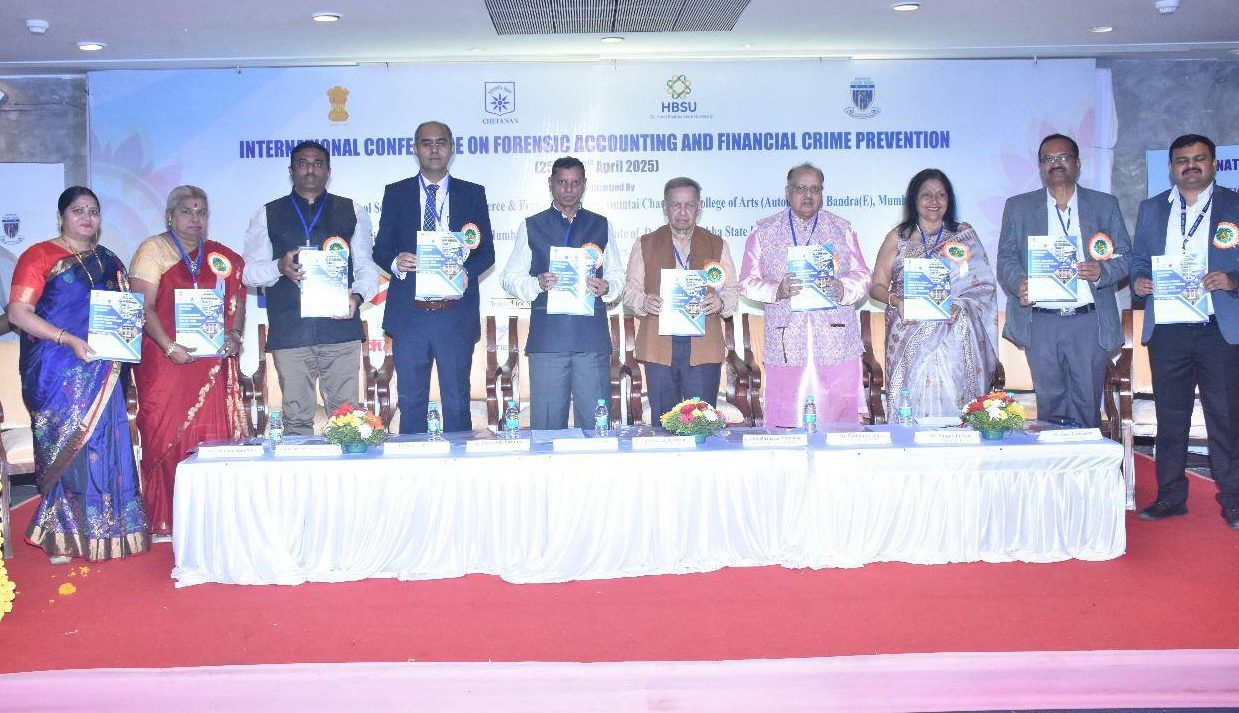







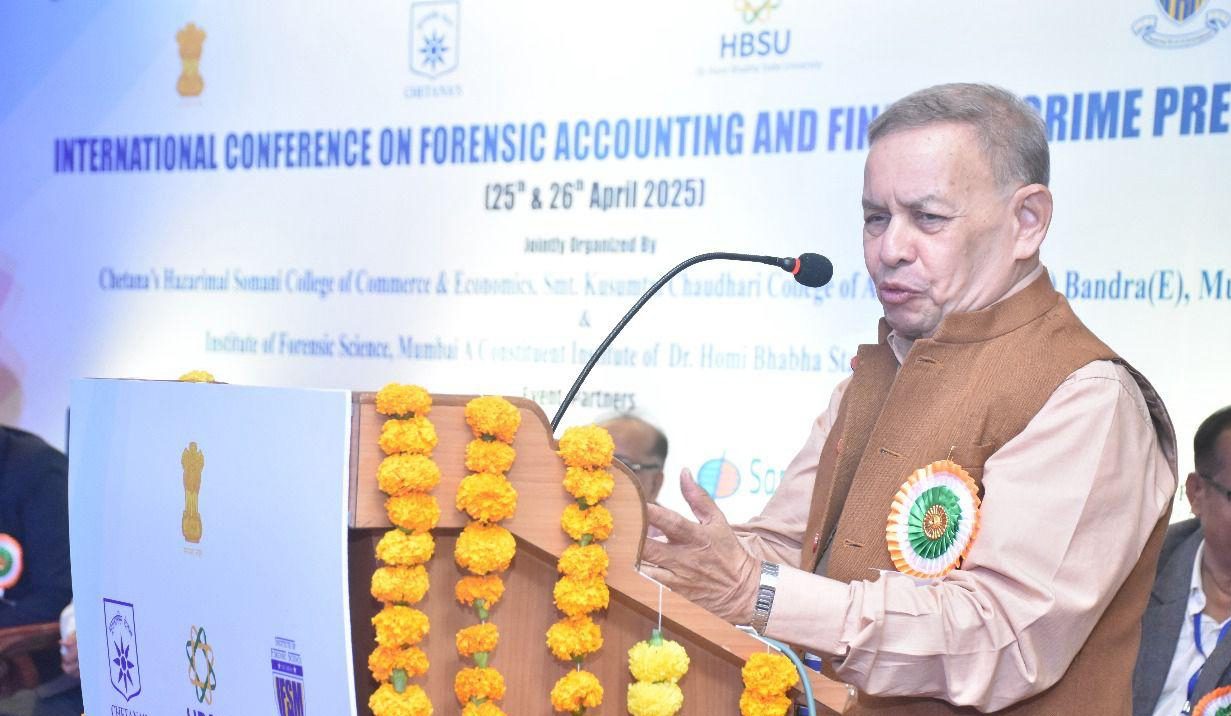
India is poised to achieve a historic milestone by becoming the world’s third-largest economy within the next two years, said Dr. Satish Marathe, Director of the Reserve Bank of India, while inaugurating the international conference on “Forensic Accounting: Preventing Financial Crimes” at Chetana College on Friday in Mumbai.
Marathe emphasized that in a rapidly expanding economy, awareness and expertise in forensic science and accounting are no longer optional but vital. “India’s economy currently ranks fifth in the world. As we ascend to the third position, strengthening sectors like forensic accounting is essential for safeguarding economic integrity,” he asserted.
Organized jointly by Chetana College and the Government Institute of Forensic Science (Homi Bhabha University), the two-day international conference aims to deepen the understanding of forensic practices critical in combating financial crimes. Marathe highlighted that economic growth must be underpinned by systems capable of detecting, investigating, and preventing frauds and financial irregularities.
“As our financial ecosystem becomes more sophisticated, so do the methods of crime. Awareness and specialized knowledge in forensic accounting will help us build resilience against threats,” Marathe said, calling the conference a timely initiative.
Following the inauguration, forensic accounting and audit expert Dr. Durgesh Pandey delivered the keynote address. Dr. Pandey pointed out the massive shift toward digital transactions globally, with 80% of financial operations now taking place online. “Of this, an impressive 67% of digital transactions occur through UPI in India alone,” he noted.
However, he also warned of the dark side of digitization—rising cybercrimes. Alarmingly, 67% of digital fraud cases in India go unreported, he said, adding that contrary to popular belief, educated individuals are more vulnerable to such crimes than their less-educated counterparts.
“There is an urgent need to promote cybercrime awareness among the masses. While technology adoption is crucial, equally important is equipping citizens with knowledge to protect themselves,” Dr. Pandey emphasized. He also suggested integrating computer science and criminal psychology deeper into forensic accounting education to better counter cyber threats.
The conference brings together over 50 expert researchers, including three international speakers, across 14 sessions discussing topics ranging from digital forensic methods to emerging trends in economic offenses. Distinguished personalities such as Dr. Ramdas Atram, Dr. Vijay Thakare, Dr. Vandana Kamble, Dr. Rukmini Krishnamurthy, Pt. Shridatt Haldankar, Dr. Madhumita Patil, Dr. Sanjay Jagtap, and Prof. Amol Deshmukh also graced the event.
Marathe’s remarks served as a powerful reminder that India’s economic journey must be paralleled by the strengthening of institutions that ensure transparency and accountability. As India accelerates toward its goal of becoming a top-tier economy, forums like this conference provide an essential platform to prepare the country for the challenges ahead.