





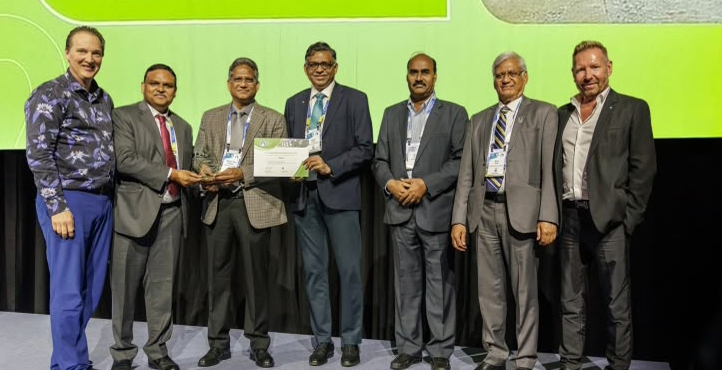
The National Dairy Development Board (NDDB) has brought international recognition to India’s cooperative dairy movement by winning the prestigious International Dairy Federation (IDF) Dairy Innovation Award 2026 for its initiative to empower women through dairy cooperatives in Manipur.
The award was presented in the category of Innovation in Socioeconomic Sustainability in Farming at the IDF World Dairy Summit 2026 in Auckland, New Zealand. The initiative, titled “Manipur Dairy in India: Building Bridges Through Women-Centric Cooperatives for Sustainable Livelihood Development”, was selected from 182 submissions representing 23 countries, making the achievement particularly significant.
Dr Meenesh Shah, Chairman, NDDB and National Secretary, Indian National Committee (INC) of IDF, received the award in the presence of Naresh Pal Gangwar, Secretary, Department of Animal Husbandry and Dairying, Government of India, and President, INC-IDF.
Jayen Mehta, Managing Director, Gujarat Cooperative Milk Marketing Federation (GCMMF), which markets Amul products, Shirsat Kapil, Managing Director, COMFED (Sudha), and representatives of the Indian Dairy Association were also present on the occasion.
The award recognises Manipur’s remarkable journey of using women-centric dairy cooperatives to strengthen rural livelihoods, promote economic inclusion and bring diverse communities together through shared economic opportunities. It also highlights how organised dairying can create sustainable income avenues for women in regions where institutional support and market access have traditionally remained limited.
Under NDDB’s professional management, Manipur Dairy is undergoing a process of revival and institutional strengthening. The initiative focuses on building stronger cooperative institutions, improving livestock productivity, introducing innovative milk procurement technologies and expanding organised marketing networks to provide dairy farmers with better access to markets.
The transformation is particularly important for Manipur, where strengthening the dairy sector can reduce dependence on outside milk supplies while creating additional livelihood opportunities for rural households. By bringing more women into organised dairy activities, the initiative is also helping them become economically active stakeholders in the cooperative movement.
The achievement has added significance in the context of White Revolution 2.0, which seeks to expand dairy cooperative coverage, strengthen grassroots institutions and empower women through organised milk production and procurement. The Manipur experience demonstrates how professional management, technology and community participation can work together to revitalise dairy institutions in underserved regions.
Beyond the award, the initiative carries a larger message about the potential of cooperation to overcome geographical and social barriers. The determination of Manipur’s women dairy farmers has emerged as a compelling example of how collective enterprise can improve household incomes, strengthen rural economies and build bridges between communities.
For NDDB, the international recognition is an endorsement of its efforts to extend India’s successful cooperative dairy model to new regions and make dairying a stronger instrument of inclusive and sustainable development.