






The controversy over control of Kolhapur-based Gokul Dairy Cooperative has widened into a major political confrontation, with the Maharashtra Congress accusing the BJP-led government of undermining the democratic rights of nearly 5.5 lakh dairy farmers.
In a post on X, the Maharashtra Congress alleged that the government was attempting to take control of Gokul through the back door by granting voting rights to government-nominated directors, thereby overriding the mandate given by milk producers. The party termed the move another instance of “vote and election chori”.
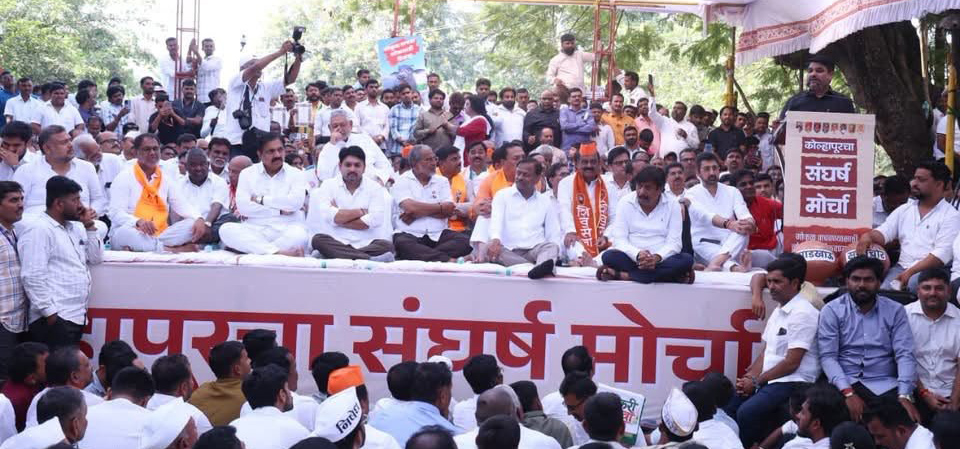
The opposition stepped up its campaign with a massive protest march in Kolhapur led by Congress MLC Satej alias Bunty Patil. The demonstration attracted several prominent political leaders and cooperative sector representatives from across Maharashtra, besides thousands of farmers and dairy activists.
Among those who joined the protest were MP Shahu Maharaj Chhatrapati, NCP leader Jayant Patil, former MP Raju Shetti and MPs Vishal Patil, among others. Congress General Secretary K.C. Venugopal also extended support to the agitation, alleging that the government’s move would dilute farmers’ control over the state’s dairy cooperative sector.
The protesters are demanding that Gokul’s democratic functioning and farmers’ autonomy be protected, while also seeking better prices for their milk. The agitation has consequently brought the wider issue of political interference in cooperative institutions into sharp focus.
The confrontation has also drawn strong reactions from other quarters. CJP chief Dipke and Congress leader Rahul Gandhi have described the proposed intervention as a dictatorial takeover of Gokul’s board. Dipke, too, accused Chief Minister Devendra Fadnavis of attempting a hostile takeover of the cooperative as thousands gathered in Kolhapur.
Fadnavis, however, has rejected allegations that the government intends to take control of the Kolhapur District Cooperative Milk Producers’ Union, popularly known as Gokul Dairy. According to media reports, he maintained that the decision to nominate directors with voting rights was aimed at resolving a quorum crisis that had stalled the election of the chairman.
Explaining the government’s position, Fadnavis said neither of the two rival groups had the numbers required to fulfil the quorum, making it difficult to elect the chairman. He pointed out that under Gokul’s bylaws, repeated failure to hold the election could result in powers being transferred to the District Deputy Registrar, leaving elected representatives without authority over the cooperative.
The Chief Minister urged leaders of both factions to settle their differences through dialogue, asserting that the government had no intention of interfering in Gokul’s functioning.
Meanwhile, the legal battle took a significant turn on Monday, when the Bombay High Court’s Aurangabad bench refused to stay the election for Gokul’s chairman, scheduled for November 10, 2026. The court also permitted the four government-nominated directors to participate in the voting.
The court’s decision has added another dimension to an already heated confrontation, with the chairman’s election now emerging as the immediate test of strength between the rival camps. Beyond the leadership contest, however, the Gokul episode has become a larger test of cooperative autonomy, elected representation and the extent of government intervention in farmer-owned institutions.