






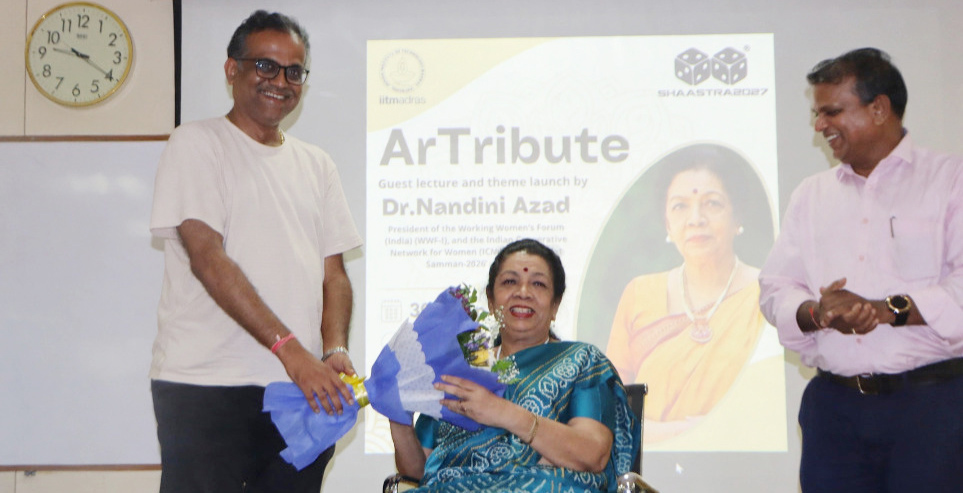
Dr. Nandini Azad, President of the Working Women’s Forum (India) and Indian Cooperative Network for Women (ICNW), used the IIT Madras Shaastra platform to highlight how grassroots women’s cooperatives can transform economic vulnerability into ownership, leadership and social change.
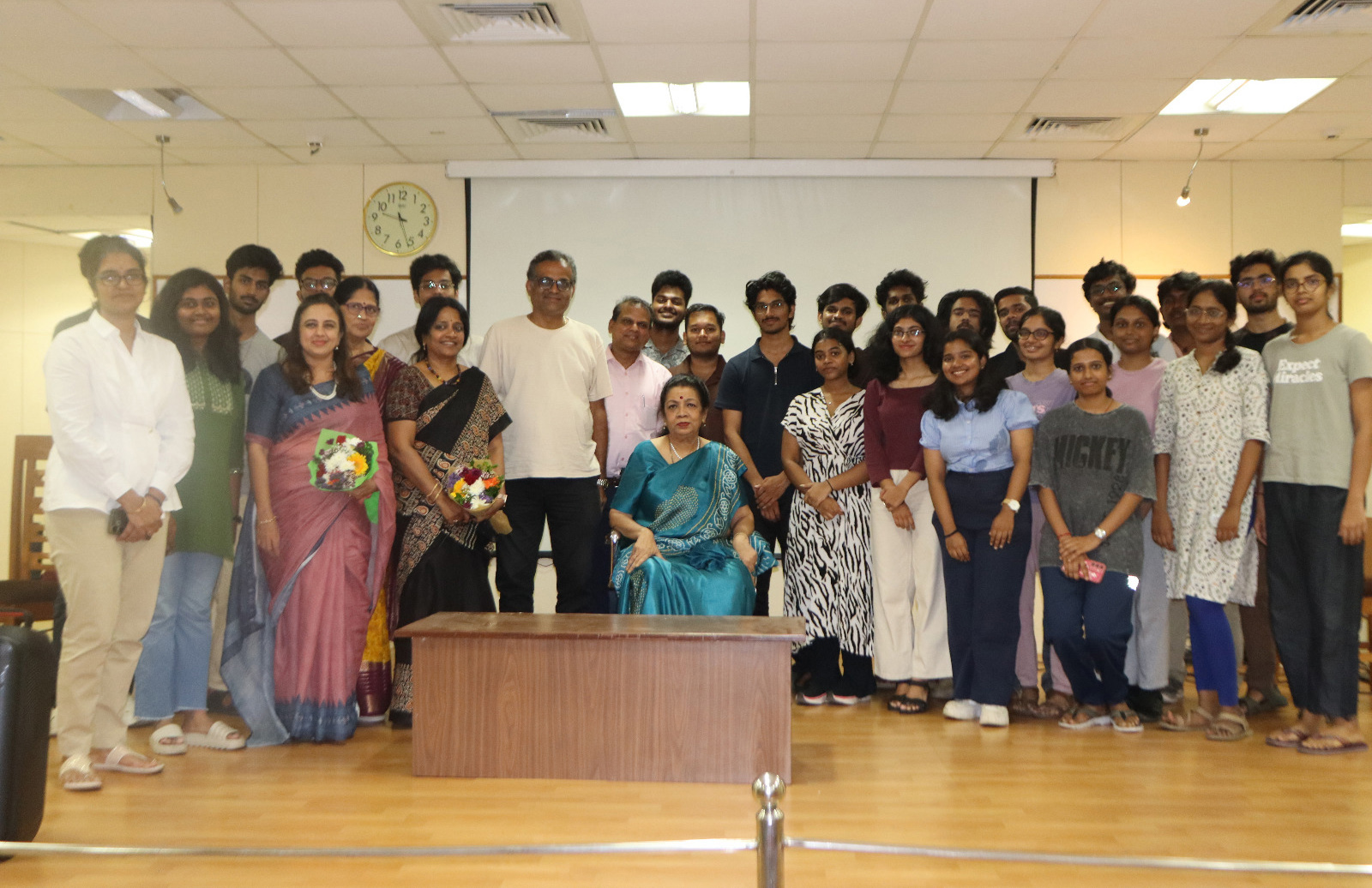
Speaking at the ArTribute 2026 theme launch, “Shades of Her – Tribute to Women”, at IIT Madras recently, Azad said technological and economic progress must also create agency for people, particularly women who remain invisible in the informal economy. She congratulated IIT Madras and the Shaastra team for creating a platform where science, innovation and women’s empowerment could intersect.
Recounting her own journey, Azad said her progressive family environment and the influence of educated women in her family shaped her belief that women should have no predetermined limits. Her PhD at Syracuse University, she said, was significant not merely as an academic achievement but because it showed her daughter that marriage need not end a woman’s professional aspirations.
Azad then connected her personal journey to the cooperative movement she has led for decades. She said more than 90% of poor women workers in India are engaged in the informal sector, often working without adequate bargaining power, investment capacity, regulation or institutional support.
 The WWF and ICNW began working with poor women in 1978 and 1981 respectively and now have more than 600,000 women members across Tamil Nadu, Karnataka, Andhra Pradesh and Telangana. Members are engaged in 262 occupations, including farming, fishing, vending, poultry, weaving and food businesses.
Azad said the organisations have disbursed nearly ?500 crore through small loans, combining finance with gender awareness, leadership training, enterprise diversification and asset creation.
She illustrated the approach through Padmavathy, who progressed from receiving grain wages to acquiring bullocks, agricultural equipment and farmland through successive loans. She eventually took decisions on crop selection and marketing, while her family expanded into farming and dairy activities.
According to Azad, 38% of ICNW women members have acquired land titles in their names, strengthening their role in household and economic decisions. She described this as the “Accumulation at Base” model, through which women progress from financial support and education to diversified livelihoods, asset ownership and community leadership.
She also highlighted digital literacy initiatives, noting that 65 CEOs, branch managers and women leaders were trained in digital transactions, NEFT and UPI during the pandemic. The network, she said, has a software unit staffed by young women engineers from labour and fishing families.
Azad further highlighted the movement’s international engagement, including participation in UN commissions, COP27 and COP28, the G20 Social Summit and global cooperative forums. She said the WWF-ICNW’s experience demonstrates that poor women can successfully manage institutions when provided with finance, training and opportunities.
Calling on IIT Madras’s young audience to become partners in this transformation, Azad said the challenge is not merely to improve individual lives but to build a future where every woman can participate as an owner, decision-maker and leader.