






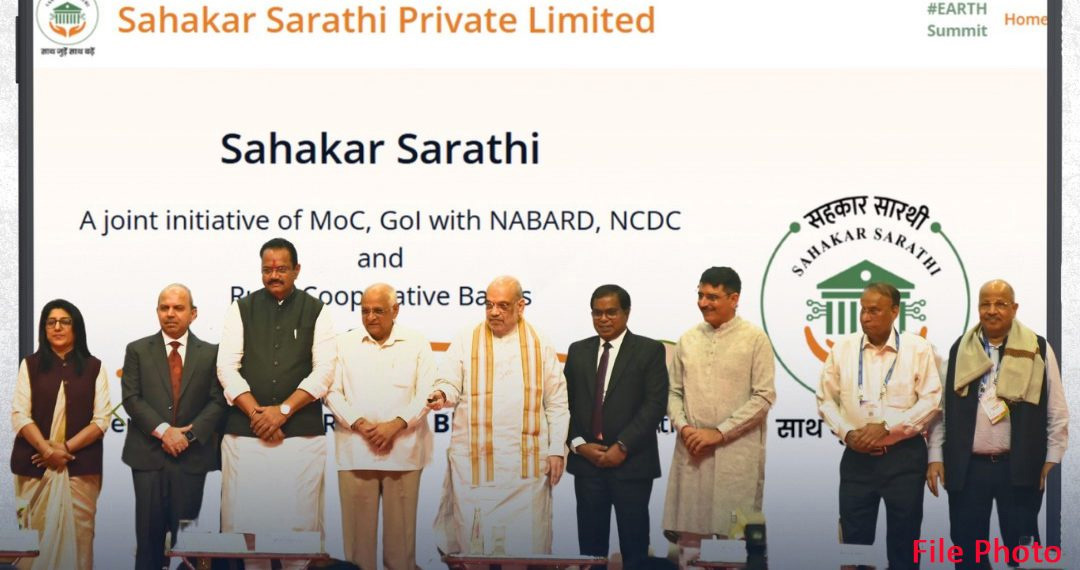
Sahakar Sarathi Private Limited (SSPL), the shared-services platform created to accelerate the digital transformation of Rural Cooperative Banks (RCBs), mobilised equity of Rs 803.18 crore by March 2026 and helped 315 cooperative banks migrate to the exclusive bank.in internet domain during its first year of operations.
Established with the approval of the Reserve Bank of India and registered on July 21, 2025, SSPL is backed equally by NABARD, the National Cooperative Development Corporation (NCDC) and participating RCBs, with each holding 33.33% of the entity.
Its authorised capital has been fixed at Rs 1,000 crore. The Ministry of Cooperation has described Sahakar Sarathi as a mechanism to provide RCBs with modern, standardised banking technology at affordable cost.
The initiative was conceived to address long-standing challenges faced by rural cooperative banks, including fragmented technology systems, uneven digital adoption, rising compliance requirements and the high cost of independently developing and maintaining sophisticated banking infrastructure. NABARD has said the shared-services model is intended to create economies of scale while improving efficiency, service quality and digital capabilities.
During FY2025-26, SSPL piloted a range of technology and business-support services. These included generative-AI bots, migration of banks to the bank.in domain, collections support and a centralised digital credit platform.
One of the notable business-development initiatives generated vehicle-loan cross-sell leads worth Rs 191 crore from around 23,000 customers. A pilot collections call centre recovered Rs 2.91 crore, while the centralised digital credit platform went live at four RCBs.
The bank.in migration is particularly significant as the domain is designed to provide customers with greater assurance that they are accessing genuine banking websites. The Ministry of Cooperation has identified domain migration, cybersecurity and IT governance among Sahakar Sarathi’s core services, alongside common Core Banking Solutions, digital payment systems such as UPI and AePS, training and capacity building.
Sahakar Sarathi’s role has expanded rapidly since its launch. Its website now describes a network of 385+ Rural Cooperative Banks, serving around 130 million customers through nearly 15,800 branches. The platform says its model allows banks to access shared infrastructure while lowering total technology ownership costs, with a modular “pick as you grow, pay as you go” approach.
The company’s current roadmap goes beyond basic digitisation. It envisages shared cybersecurity operations, cloud infrastructure, payment rails, middleware, upgraded Core Banking System support, digital platforms and other common technology services.
The broader objective is to enable RCBs to compete in an increasingly digital banking environment without each institution having to independently build expensive technology infrastructure. NABARD has described the initiative as a strategic intervention aimed at creating a secure, scalable and cost-effective technology ecosystem for rural cooperative banking.
With its capital mobilisation, expanding bank network and early pilots already producing measurable business and recovery outcomes, Sahakar Sarathi is positioning itself as a common digital backbone for India’s rural cooperative banking sector.