






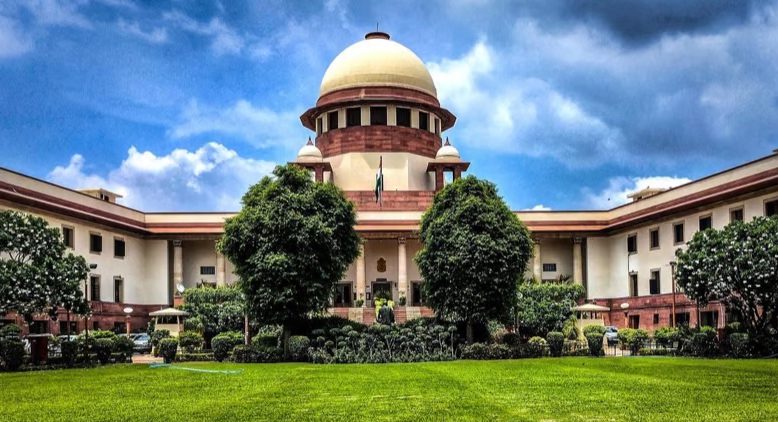
The Supreme Court on Thursday upheld the Reserve Bank of India’s power to supersede the Board of Directors of a multi-State co-operative bank and continue such supersession beyond the elected Board’s original tenure, subject to the statutory outer limit of five years.
A Bench comprising Justice Pamidighantam Sri Narasimha and Justice Alok Aradhe dismissed the appeals in Sandeep S. Ghandat & Ors. vs Reserve Bank of India & Ors., concerning the supersession of the Board of Abhyudaya Co-operative Bank Ltd. The judgment was pronounced on Thursday, September 3, 2026.
The Court held that RBI’s power under Section 36AAA of the Banking Regulation Act, 1949, is not circumscribed by the six-month limit prescribed under Article 243ZL(1) of the Constitution. The Court also held that the provisions of the Banking Regulation Act apply to multi-State co-operative banks.
Importantly, the Court ruled that an order of supersession passed under Section 36AAA(1) can be extended beyond the term for which the Board was originally elected, provided the total period of supersession does not exceed five years.
The Court noted that, in the present case, the initial supersession order was passed while the Board’s statutory term was still subsisting, and the subsequent extensions remained within the five-year outer limit.
The Court further held that the consultation requirement under the proviso to Section 36AAA(1) applies only to a co-operative bank registered with the Registrar of Co-operative Societies of a State. Since Abhyudaya Co-operative Bank is a multi-State co-operative bank, the consultation requirement did not apply to it.
The appeals were accordingly dismissed, with no order as to costs.
The case arose after RBI, on November 24, 2023, superseded the Board of Directors of Abhyudaya Co-operative Bank for one year and appointed an Administrator.
The elected directors challenged the RBI’s action before the Bombay High Court, arguing, among other grounds, that the supersession could not continue beyond the six-month period under Article 243ZL of the Constitution and could not extend beyond the tenure for which the Board had been elected.
While the proceedings were pending, the Board’s five-year statutory term expired on May 24, 2024. RBI subsequently extended the supersession for a further year from November 24, 2024, and again issued an extension effective from November 24, 2025.
The Bombay High Court upheld RBI’s action in its judgment dated November 18, 2024, following which the appellants approached the Supreme Court.