






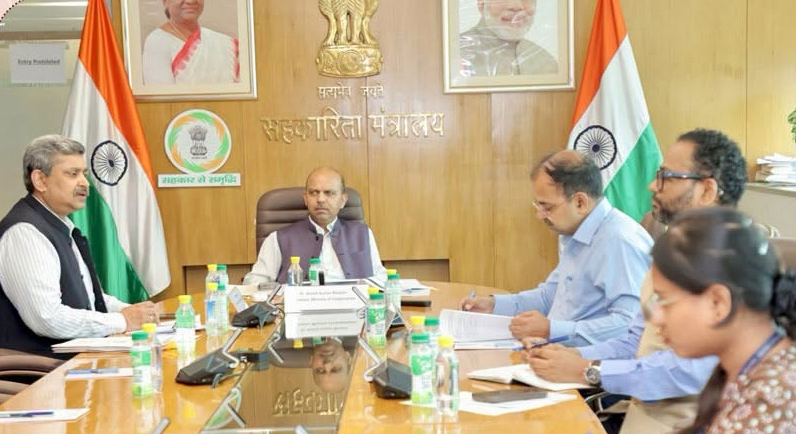
The Ministry of Cooperation has stepped up its review of the nationwide computerisation of Primary Agricultural Credit Societies (PACS), with the 7th meeting of the National Level Monitoring and Implementation Committee focusing on faster implementation, stronger digital operations and improved services for farmers.
The meeting was held at Atal Akshay Urja Bhawan, New Delhi, under the chairmanship of Dr Ashish Bhutani, Secretary, Ministry of Cooperation, in the presence of Additional Secretary Siddharth Jain. Officials from the Agri Research Division of NITI Aayog, NABARD Chairman Shaji K.V., Registrars of Cooperative Societies and senior officials from state Cooperation Departments participated. Regional Chief General Managers of NABARD from eight states also attended.
Detailed discussions were held with NABARD on the progress of PACS computerisation, state-level suggestions and implementation challenges. The committee also deliberated on strategies to make PACS operations more efficient and digitally enabled, with the larger objective of delivering faster, simpler and better services to farmers and strengthening the rural economy.
Key areas reviewed included overall project progress, functioning of newly formed PACS, human resource policies and measures to facilitate lending to farmers. The meeting also discussed strengthening mobile applications and SMS alert systems to improve communication with members and beneficiaries.
The committee considered changes and resolutions required to address emerging implementation needs and also deliberated on a policy for constituting auditor panels for a three-year period. Particular emphasis was placed on ensuring timely supply of hardware under Phase-II of the computerisation project.
The computerisation programme is aimed at transforming PACS into modern, technology-enabled cooperative institutions capable of providing a wider range of financial and other services at the grassroots level. By integrating PACS with a common digital platform and strengthening their technological infrastructure, the government seeks to improve transparency, efficiency and service delivery.
The latest review also underlines the importance of addressing operational and human-resource challenges alongside technological upgrades. Effective implementation at the state and district levels will be critical to ensuring that computerisation translates into tangible benefits for farmers and rural communities.
With PACS serving as the primary interface between cooperative credit institutions and millions of rural members, the government’s continued focus on digitalisation is expected to strengthen their role in rural credit delivery, improve access to services and contribute to the broader objective of building a more efficient and resilient cooperative ecosystem.