







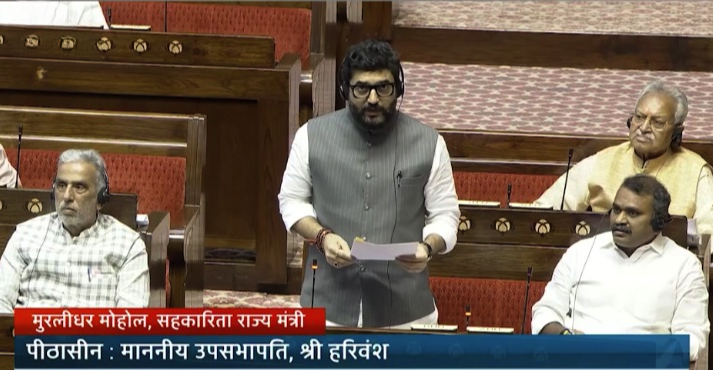
The Rajya Sabha on Wednesday passed the National Co-operative Development Corporation (Amendment) Bill, 2026, completing Parliament’s approval of a legislation that seeks to significantly expand the financing and development role of NCDC and give cooperative societies more direct access to institutional support. The Bill had earlier been cleared by the Lok Sabha and will now move for Presidential assent before its provisions can come into force as notified.
The most significant change is the proposed empowerment of NCDC to provide loans and grants directly to cooperative societies and entities engaged in cooperative development, subject to prescribed security requirements and conditions. This is expected to reduce dependence on intermediary channels and make NCDC assistance more accessible to eligible cooperatives undertaking development-oriented activities.
The amended framework will also allow NCDC, with the approval of the Central Government, to participate in the share capital of cooperative societies and other entities involved in cooperative development. This provision could enable NCDC to play a more active role in strengthening the capital base of cooperatives and supporting institutions with growth potential.
The Bill also broadens the meaning of “co-operative development” to include the planning, promotion and financing of cooperative programmes, either directly or through intermediary entities. The expanded mandate is intended to give NCDC greater flexibility to respond to the changing requirements of India’s cooperative sector.
Another important provision expands the range of products and activities eligible for NCDC support. Processed food and other edible products have been brought within the scope, along with other food items that may subsequently be notified by the Centre. The move is significant for cooperatives operating across agriculture, food processing, storage, marketing and value-added activities.
The legislation comes at a time when the government is seeking to build stronger cooperative institutions under the broader “Sahkar Se Samriddhi” vision. NCDC is already a key financial institution for cooperative development and provides financial assistance to cooperatives either directly or through state governments.
According to a Rajya Sabha reply in March 2026, NCDC had provided Rs 24.18 crore to cooperative development activities in Tamil Nadu during 2024-25 and Rs 23.86 crore during 2025-26 up to March 9, besides sanctioning a Rs 600-crore term loan to the Tamil Nadu State Apex Fisheries Cooperative Federation for expansion and construction of four fishing harbours.
During the Rajya Sabha debate, Telugu Desam Party MP Chintakayala Vijay extended his party’s support to the Bill and endorsed the government’s “Sahkar Se Samriddhi” approach. He said stronger cooperatives could create greater economic opportunities for farmers, small producers and rural communities by improving access to finance and supporting production, storage and marketing.
Vijay stressed the importance of strengthening the financial and institutional capacity of cooperatives and called for closer Centre-State coordination so that cooperative-sector reforms translate into tangible benefits for farmers and rural communities. He also highlighted Andhra Pradesh Chief Minister N. Chandrababu Naidu’s efforts to strengthen cooperatives and link them more closely with rural development.
With both Houses now approving the legislation, Presidential assent remains the final constitutional step. Once notified, the amended law could provide NCDC with a substantially broader toolkit for financing, capital participation and promotion of cooperative enterprises, potentially giving cooperatives greater financial flexibility to expand, diversify and build stronger value chains.