







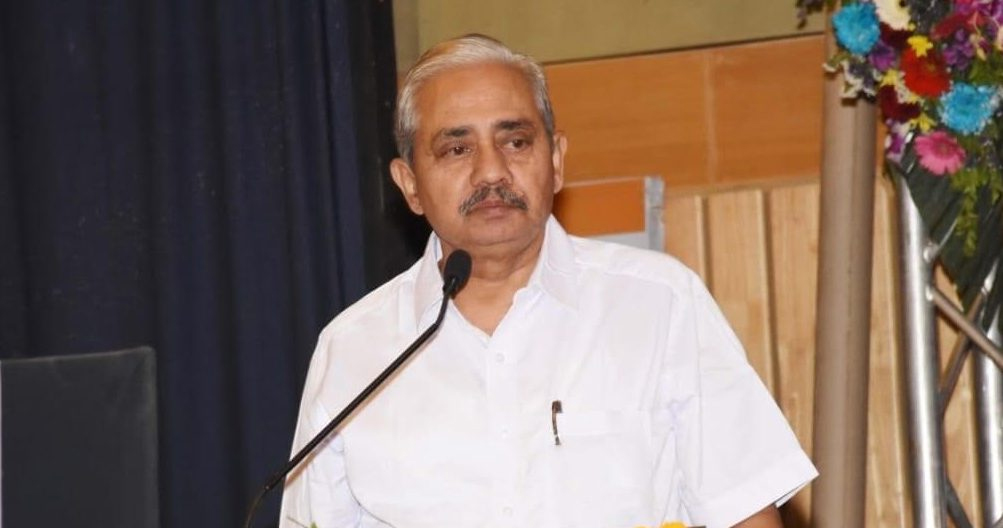
Sahakar Bharati has welcomed the RBI’s latest Economic Policy Statement, describing the measures announced by RBI Governor Sanjay Malhotra for the cooperative banking sector as a significant step towards strengthening the movement.
In a statement, Sahakar Bharati National President Dr Uday Joshi particularly hailed the RBI’s decision to introduce an on-tap licensing regime for new Urban Cooperative Banks (UCBs), calling it a long-awaited reform.
He noted that the issuance of fresh licences for new UCBs had virtually remained discontinued since 2000, creating gaps in the availability of cooperative banking services, especially in semi-urban and mofussil areas.
Dr Joshi said Sahakar Bharati had consistently pursued the demand for fresh UCB licences to expand financial inclusion and bridge the credit gap in underserved regions. He observed that the RBI’s decision reflects growing confidence in the improved governance, financial health and overall performance of Urban Cooperative Banks across the country.
Sahakar Bharati also expressed hope that the new policy would create an opportunity for eligible credit cooperative societies to be converted into Urban Cooperative Banks, thereby strengthening the formal cooperative banking ecosystem. However, the organisation pointed out that the RBI is yet to finalise the Entry Point Norms (EPNs) for licensing new UCBs.
Joshi urged the central bank to ensure that the proposed Entry Point Norms are realistic, practical and capable of being implemented by genuine cooperative institutions. He further suggested that RBI should provide a “glide path” enabling newly licensed UCBs to achieve prescribed performance and regulatory benchmarks over a period of five years instead of expecting immediate compliance with all norms.
Commenting on the RBI’s proposal to strengthen risk management frameworks in Regional Rural Banks (RRBs), Sahakar Bharati said the initiative would significantly improve governance, operational efficiency and financial stability in the rural banking sector. The organisation expressed confidence that the latest policy initiatives would provide fresh momentum to cooperative banking and further deepen the reach of institutional credit across the country.
The RBI’s policy announcement assumes added significance as it formally sets the stage for the revival of licensing of new Urban Cooperative Banks after nearly two decades. The central bank said it would shortly issue draft guidelines for ‘on-tap’ licensing of UCBs for public consultation.
The move follows a discussion paper released on January 13, 2026, which sought stakeholder feedback on the future licensing framework. After examining the responses, the RBI has decided to resume the licensing process, with the final framework to be evolved after consultations.
The central bank also announced a review of the Concentration Risk Management guidelines applicable to Rural Cooperative Banks (RCBs). The existing Credit Monitoring Arrangement (CMA) norms, framed in 2008, will be revisited in view of the significant transformation of the banking and cooperative sectors over the past 18 years. Draft amendment directions will be issued after stakeholder consultation to balance business growth with prudent risk management.