






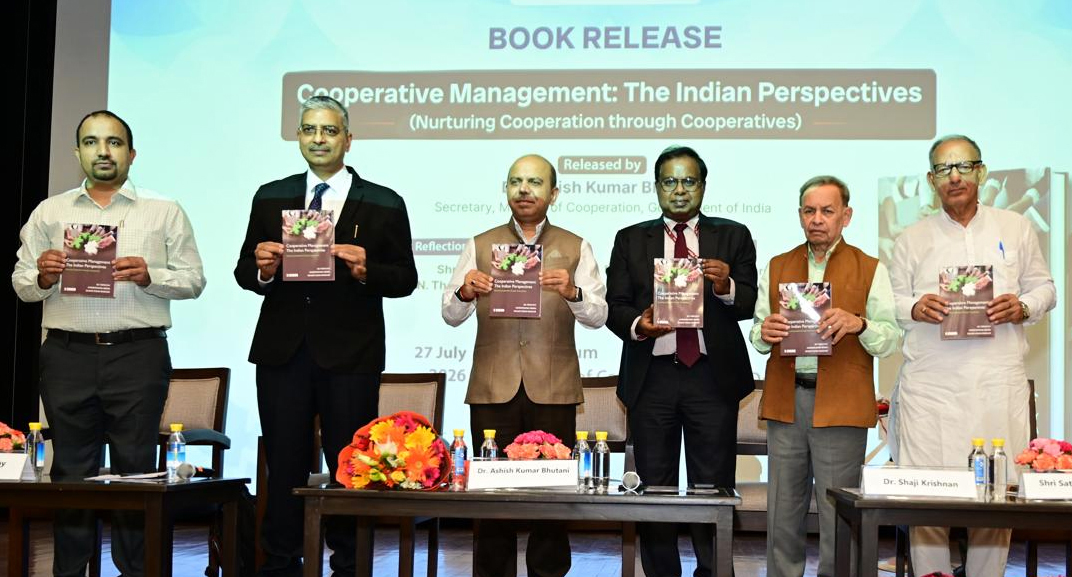
Cooperation Secretary Ashish Kumar Bhutani has called for a new phase of growth in India’s cooperative movement based on the principle of “cooperation among cooperatives”, saying greater collaboration, professional management and stronger cooperative banking institutions are essential to realise the vision of a vibrant and self-reliant cooperative sector.
Speaking at the release of the book, Cooperative Management – The Indian Perspective, authored by K. K. Tripathy and others in New Delhi, Bhutani described Tripathy as “a passionate researcher” whose work effectively captures both the evolution of the cooperative movement and the transformation underway since the creation of the Ministry of Cooperation.
Highlighting banking as one of the Ministry’s key focus areas, Bhutani said continuous efforts are being made in consultation with the Reserve Bank of India to secure more banking licences for cooperative institutions. Strong cooperative banks, he said, are indispensable for expanding financial inclusion and supporting the rapid growth of the cooperative sector.
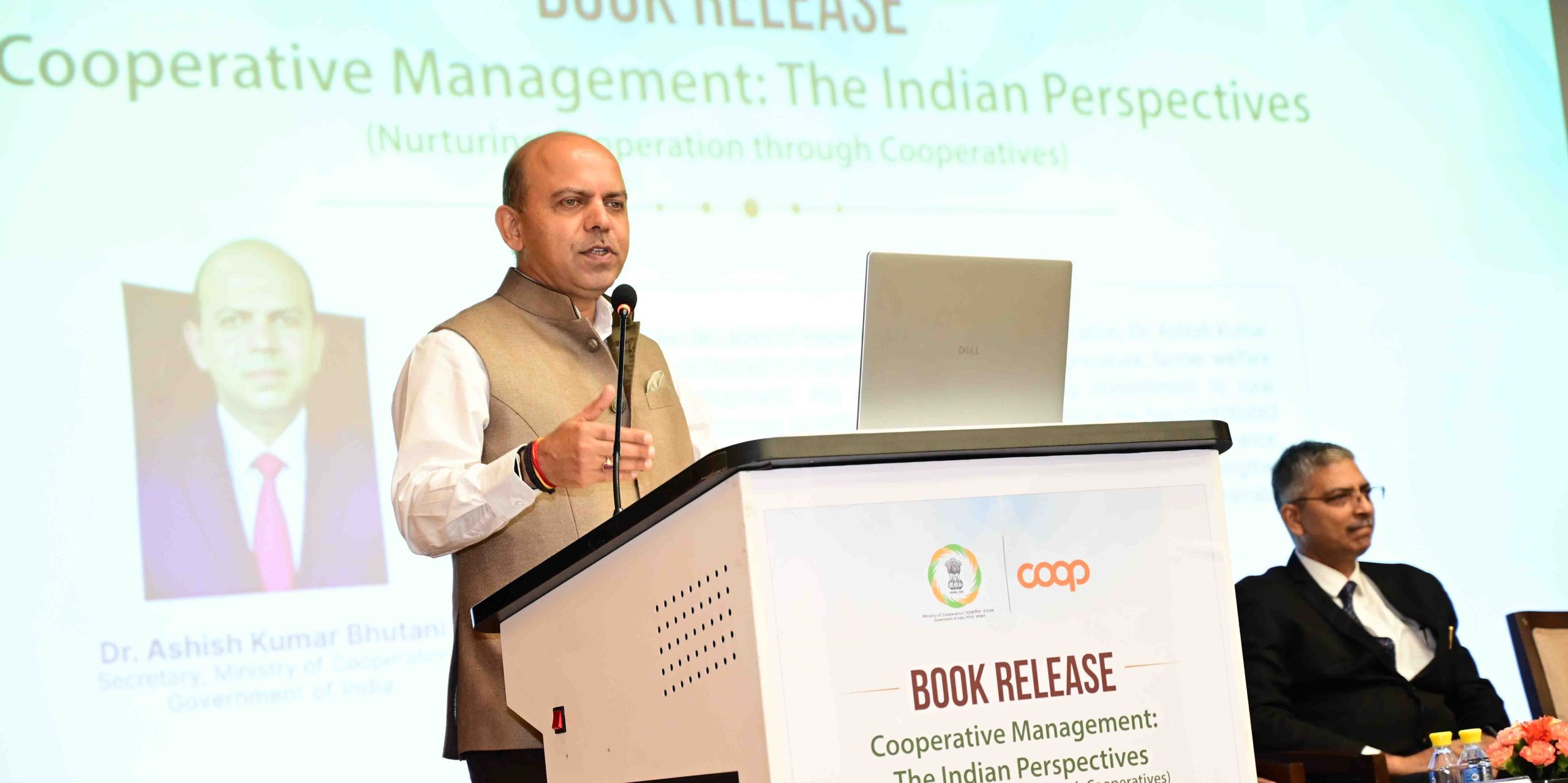 Bhutani said the Ministry has translated the idea of “cooperation through cooperatives” into action. Earlier, he noted, most cooperative institutions maintained their bank accounts with commercial banks. Following sustained efforts by the Ministry, a large number of cooperatives shifted their accounts to cooperative banks, resulting in nearly Rs 20,000 crore becoming available within the cooperative banking system. In contrast, he remarked, ATMs of several commercial banks in many rural locations now remain underutilised, underlining the growing acceptance of cooperative banking.
Calling for greater mutual support among cooperatives, Bhutani said the concept had first been experimented with in two districts of Gujarat before being expanded across the state. Building on this success, the Ministry facilitated the formation of five new national cooperative institutions entirely by existing cooperatives.
He added that similar cooperative models are now being explored in emerging sectors such as ethanol production, dairy, sugar, electric vehicle charging infrastructure and other sunrise industries.
The Cooperation Secretary also revealed that the Ministry had written to all stakeholders seeking information on sick cooperative sugar mills so that revival efforts could be initiated. He said the initiative had already helped revive three cooperative sugar mills in Gujarat, demonstrating that timely intervention and coordinated action can restore struggling institutions.
Agreeing with concerns expressed by senior cooperator D. N. Thakur regarding nepotism in cooperatives, Bhutani said the sector must embrace professionalism, merit-based governance and transparent management practices to remain competitive and relevant.
He further emphasised the need for better synergy among cooperative institutions and government agencies such as NABARD and NDDB to avoid duplication of efforts. Referring to the rapid expansion of Primary Agricultural Credit Societies (PACS), Bhutani said more than 60,000 societies have already been strengthened under various initiatives, with the number expected to reach nearly two lakh over the next three years.
He suggested that multiple government and cooperative services for rural citizens could eventually be delivered through PACS, making them integrated rural service centres.
Describing the book as a comprehensive work and a roadmap for the future of the cooperative movement, Bhutani said its ideas would contribute meaningfully to shaping the next phase of cooperative-led development in the country.